
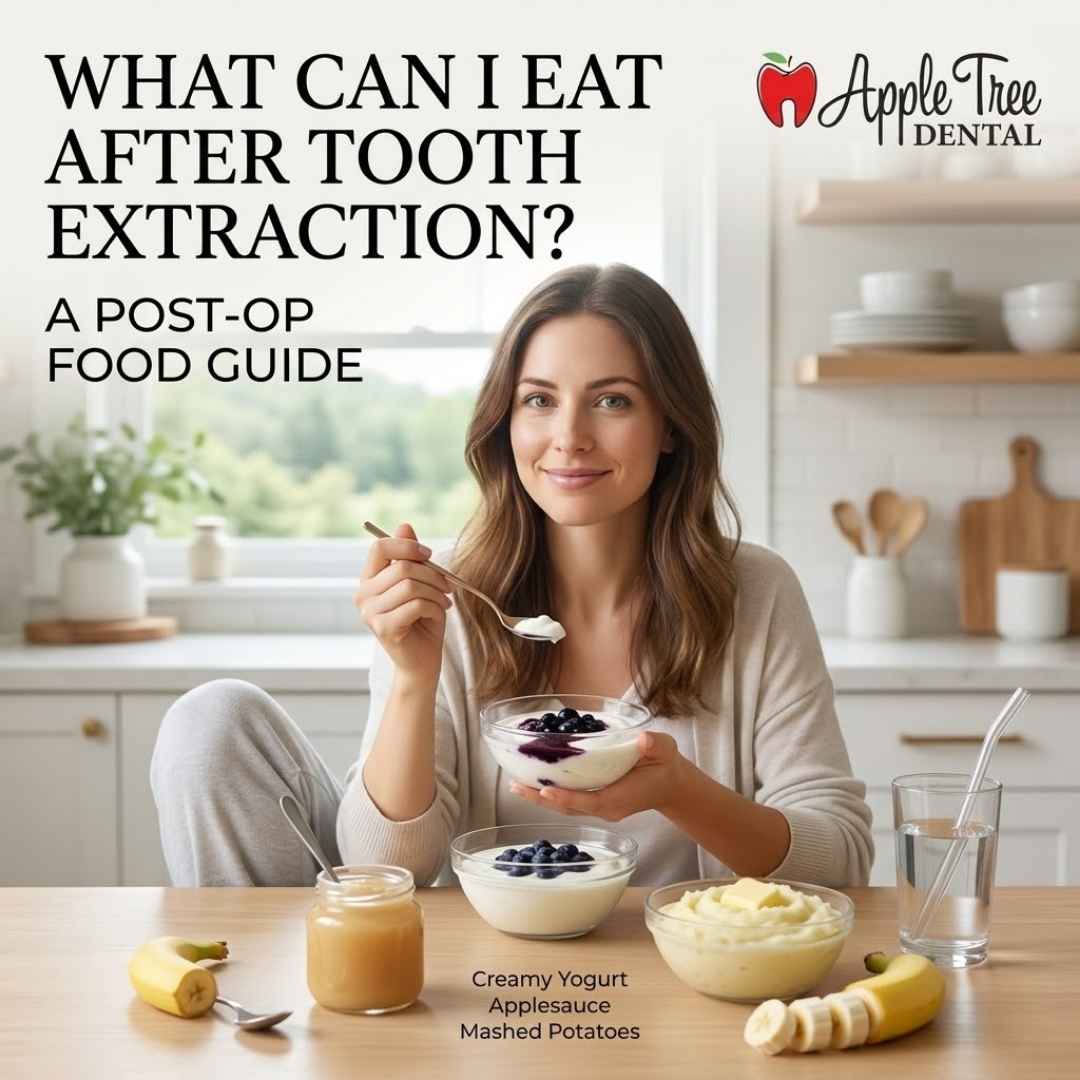
Recovering after a tooth extraction requires proper care, and one of the most important parts of recovery is choosing the right foods. Many patients ask what can I eat after tooth extraction and how long they should follow a soft diet while their gums heal. After a tooth is removed, the body forms a protective blood clot in the extraction socket. Eating the wrong foods too soon may disturb the clot and lead to complications such as dry socket. Patients who visit Apple Tree Dental in London, Ontario are often given detailed aftercare instructions to help them recover comfortably after tooth extraction procedures.
Quick Answer: What Can I Eat After Tooth Extraction?
After a tooth extraction, the safest foods are soft foods that require minimal chewing and are easy to swallow. Common foods to eat after tooth extraction include:
- Yogurt
- Mashed potatoes
- Scrambled eggs
- Applesauce
- Smoothies (without a straw)
- Soft oatmeal
- Warm soups and broths
These foods are gentle on sensitive gums and help protect the healing extraction site. According to the Canadian Dental Association, following proper post-extraction dietary guidelines plays a key role in smooth and safe recovery.
Why Diet Matters After Tooth Extraction
Choosing the right foods after dental surgery can help prevent irritation and support the healing process. Immediately after tooth removal, the extraction site is sensitive and vulnerable. Eating soft foods helps:
- Protect the healing blood clot
- Reduce pressure on the gums
- Lower the risk of complications
- Make eating more comfortable
Patients often search for what to eat after extracting tooth procedures because the wrong foods can slow recovery. Learn more about how our team supports your healing journey at Apple Tree Dental’s tooth extraction service page.
Best Foods to Eat After Tooth Extraction
Eating soft and nutritious foods during recovery helps protect the extraction site while keeping your body energized.
Yogurt
Yogurt is one of the easiest foods to consume after dental surgery. It has a smooth texture that does not require chewing and is gentle on sensitive gums. Benefits of yogurt include:
- High protein content that supports healing
- Calcium for oral health
- Cool texture that may help soothe the gums
Plain yogurt or lightly flavored varieties are often recommended during the first day of recovery.
Mashed Potatoes
Mashed potatoes are a popular choice when considering food to eat after extraction tooth procedures. They are soft and easy to swallow, filling and nutritious, and simple to prepare. To avoid irritation, allow mashed potatoes to cool slightly before eating.
Scrambled Eggs
Scrambled eggs are another soft and nutritious option during recovery. They provide high-quality protein, essential vitamins and nutrients, and a soft texture that requires minimal chewing. Eggs are often recommended when patients ask what should I eat after teeth extraction.
Smoothies
Smoothies are a convenient way to maintain nutrition while your mouth heals. They can include ingredients such as fruits, yogurt, milk, or plant-based milk. Smoothies provide vitamins and minerals, hydration, and energy during recovery. However, it is important not to drink smoothies through a straw, since suction may disturb the healing blood clot.
Soup and Broth
Warm soups are easy to consume and help keep the body hydrated during recovery. Some good options include chicken broth, vegetable soup, and cream-based soups. Allow soups to cool slightly before eating so they are warm rather than hot.
Applesauce
Applesauce is another gentle option commonly recommended after dental procedures. Because of its smooth texture, applesauce requires no chewing and is considered one of the safest things to eat after tooth extraction.
Oatmeal
Oatmeal can usually be added to the diet after the first couple of days. It is soft, nutritious, and easy to swallow. Adding mashed bananas or soft fruits can enhance flavor while keeping the meal gentle on the gums.
Best Foods After Tooth Extraction
| Food | Why It Helps |
|---|---|
| Yogurt | Soft and soothing for sensitive gums |
| Mashed Potatoes | Easy to swallow and filling |
| Scrambled Eggs | High in protein for healing |
| Applesauce | Smooth texture that requires no chewing |
| Soup | Provides hydration and nutrients |
| Oatmeal | Soft and nutritious meal |
What to Eat During the First 24 Hours After Tooth Extraction
The first 24 hours after tooth removal are the most sensitive stage of recovery. During this time, focus on foods that require little or no chewing. Recommended foods include:
- Yogurt
- Applesauce
- Protein smoothies
- Mashed potatoes
- Soft soups
Foods to Avoid After Tooth Extraction
While choosing food to eat after teeth extraction, it is equally important to know which foods should be avoided. Avoid the following foods during the first several days:
- Hard foods such as nuts
- Crunchy foods like chips or popcorn
- Sticky foods like caramel
- Spicy dishes
- Alcoholic beverages
- Extremely hot drinks
Avoiding these foods helps protect the healing socket and reduces the risk of complications. The Government of Canada’s dental care resources also highlight the importance of post-operative care for oral procedures.
Tooth Extraction Recovery Timeline
Healing after tooth extraction usually happens gradually over several days.
First 24 Hours
The blood clot forms in the extraction socket. Rest and soft foods are recommended.
Days 2–3
Swelling and tenderness may still occur but often begin to improve.
Days 4–7
The gums begin closing around the extraction site, making eating easier.
After One Week
Most patients can slowly return to their normal diet depending on their healing progress. Patients receiving treatment at Apple Tree Dental in London, Ontario often receive personalized aftercare instructions to support recovery.
Tips for Faster Healing After Tooth Extraction
Following proper aftercare can help speed up recovery. Helpful tips include:
- Eat soft foods for several days
- Avoid chewing near the extraction site
- Drink plenty of water
- Avoid using straws
- Follow your dentist’s instructions carefully
These steps help protect the extraction site and support the healing process. You may also find helpful tips on our emergency dentistry page if you experience unexpected discomfort during recovery.
Tooth Extraction Care in London, Ontario
Patients recovering from tooth removal often have questions about safe foods and healing timelines. Dental professionals at Apple Tree Dental in London, Ontario, provide guidance on aftercare and recovery so patients can heal comfortably after dental procedures. Whether you need a general dental checkup or specialized post-extraction care, our team is here to support you every step of the way.
Frequently Asked Questions
1. What foods help tooth extraction heal faster?
Soft foods such as yogurt, mashed potatoes, scrambled eggs, smoothies, and soups help support healing while protecting the extraction site.
2. Can I eat rice after tooth extraction?
Soft rice may be eaten after a few days, but small grains can become trapped in the socket. Many dentists recommend waiting until early healing occurs.
3. How long should I eat soft foods after tooth extraction?
Most patients follow a soft-food diet for three to five days, although recovery time may vary depending on the complexity of the extraction.
4. Can I drink coffee after tooth extraction?
Hot coffee should usually be avoided during the first 24 hours because heat may interfere with the healing blood clot.
5. When should I contact a dentist after tooth extraction?
You should contact a dentist if you experience severe pain, heavy bleeding, swelling that worsens, or signs of infection. Reach out to the team at Apple Tree Dental immediately if you have any concerns.
Conclusion
Recovering from a tooth extraction does not have to be difficult when you know what to eat and what to avoid. Choosing soft, nutritious foods such as yogurt, mashed potatoes, scrambled eggs, and warm soups during the first few days helps protect the healing socket and supports faster recovery. Equally important is avoiding hard, crunchy, sticky, and spicy foods that could disturb the blood clot and delay healing.
Following your dentist’s aftercare instructions carefully is the best way to ensure a smooth recovery. If you have any concerns or questions about your healing progress, do not hesitate to reach out to the caring team at Apple Tree Dental in London, Ontario. We are here to guide you through every step of your dental care journey — from the procedure itself to a full and comfortable recovery. You can also explore more about tooth extraction services at Apple Tree Dental to understand your options and what to expect.
About the Author
This article was written by the dental care team at Apple Tree Dental Clinic in London, Ontario. Our experienced dentists and oral health professionals are dedicated to providing patients with accurate, up-to-date information to support informed dental decisions. Apple Tree Dental offers a comprehensive range of services including general dentistry, cosmetic dentistry, and emergency dental care for patients across London, Ontario and surrounding communities. Our content is reviewed for accuracy and aligned with guidelines from the Canadian Dental Association and Health Canada’s oral health resources.